Blackmont
Government Bonds Analysis
The Government Bonds Analysis Section provides an in-depth exploration of sovereign debt instruments from a wide array of countries and economic zones. This section is designed to evaluate critical factors such as yield, maturity (term), credit rating, and currency, offering investors a comprehensive overview of global fixed-income opportunities.
Government bonds are essential components of diversified portfolios, offering stability and consistent returns. The analysis leverages advanced visualizations and data-driven insights to compare bonds across various sovereign issuers, enabling investors to identify optimal choices based on their specific risk tolerance and return objectives.
By focusing on sovereign debt, the tool supports portfolio construction strategies that prioritize security and risk mitigation. It integrates key metrics to assess the relative strength and appeal of bonds, enhancing the decision-making process for professional and personal investors alike.
1. Introduction:
This section incorporates a curated dataset of government bonds from issuers worldwide, representing a diverse range of maturities, ratings, and yields. The analysis is grounded in the following key attributes:
- Yield to Maturity: Detailed insights into the potential return of each bond, allowing investors to gauge profitability over the bond's lifespan.
- Maturity (Term): Bonds are categorized by short-term, medium-term, and long-term durations, accommodating varying investment horizons and liquidity preferences.
- Credit Ratings: Evaluations provided by major rating agencies (e.g., Moody’s, S&P, Fitch) to assess the creditworthiness of issuers and sovereign risk levels.
- Currency Exposure: The analysis considers the impact of currency denomination on risk and return, particularly for international investors managing exchange rate exposure.
The section employs advanced filtering tools, enabling investors to refine their search based on yield thresholds, credit quality, and term preferences. This approach facilitates the identification of bonds that align with specific investment strategies, whether focused on income generation, safety, or diversification.
Government bond data is dynamically updated to reflect the latest market conditions, ensuring access to accurate and timely information. This ensures that investors can stay ahead of economic developments and geopolitical changes, enhancing their ability to make informed decisions in a rapidly evolving financial landscape.
With its emphasis on precision and clarity, the Government Bonds Analysis Section serves as an indispensable resource for navigating the complexities of sovereign debt markets and building resilient, goal-oriented portfolios.
2. Analysis of Selected Government Bonds:
Navigating the Global Landscape: An In-Depth Analysis of Government Bonds
Government bonds are integral to global finance, offering a glimpse into economic stability and confidence. Key metrics such as Term, Rating, and Yield are pivotal for investors seeking to balance risk and return. Terms indicate the duration of the bond, Ratings offer a measure of creditworthiness, and Yields provide insights into profitability. These indicators collectively help investors make informed portfolio decisions.Analysis
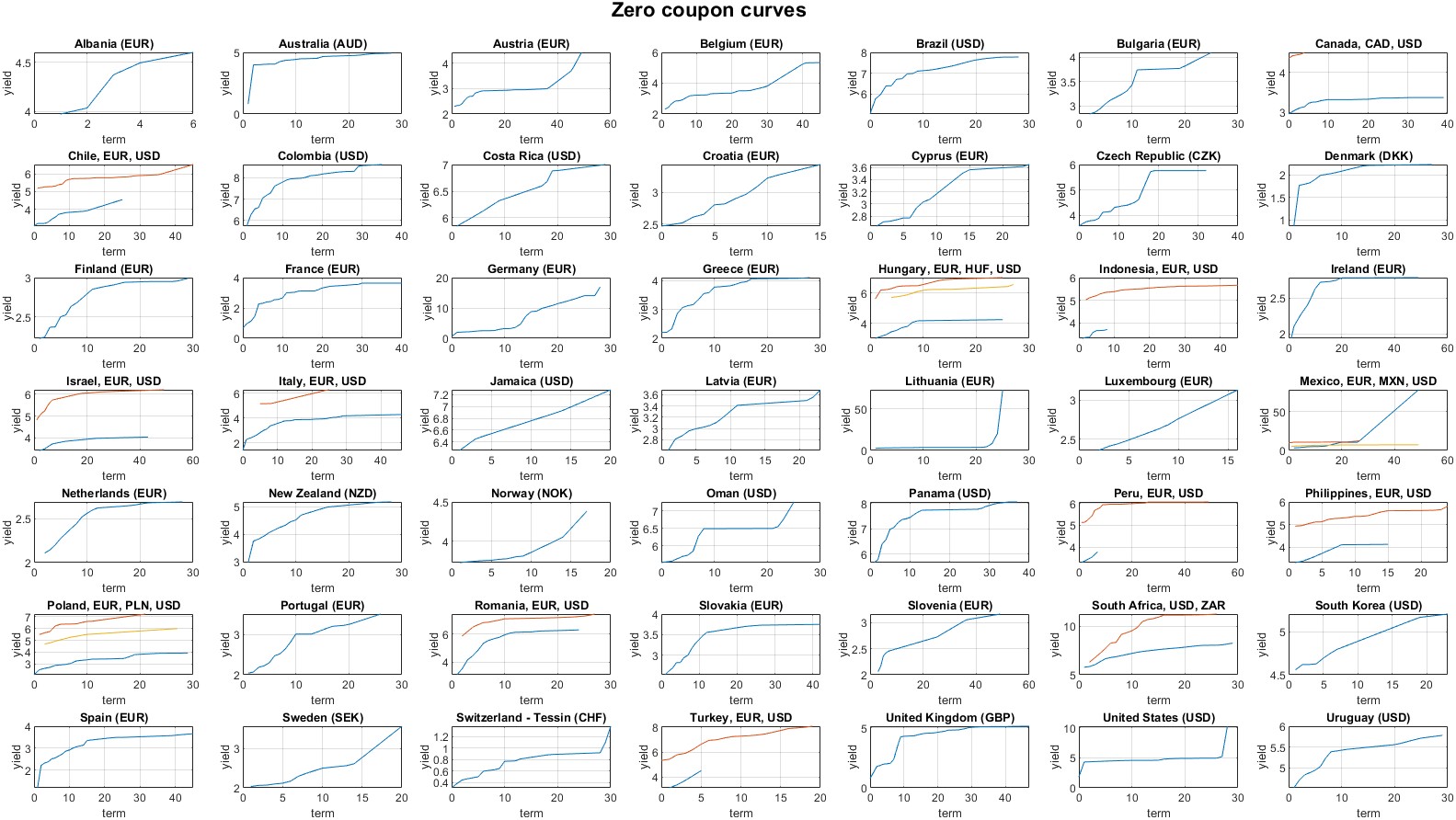
In analyzing the provided dataset, several notable patterns and relationships emerge between the Term, Rating, and Yield of government bonds. Among bonds with top ratings (Aaa and Aa1), countries like United States, Australia, and Germany demonstrate stable yield progression across varying terms, suggesting a low-risk investment profile. The United States, for instance, maintains competitive yields across terms, reflecting the dollar's global trust and economic robustness.
Interestingly, Germany, another Aaa-rated issuer, offers attractive yields, especially on longer-term bonds, indicating investor confidence in its fiscal policy.
- Australia's bonds show a steady yield increase with term, attributed to its strong credit rating and economic stability.
- In contrast, lower-rated bonds such as those from Venezuela (C rating) entail higher yields, indicative of their high-risk profile.
Analyzing bonds by Rating is telling. Aaa and Aa-rated bonds generally offer lower yields due to perceived stability and security. For example, Germany's long-term yield spikes are exceptions, highlighting potential anomalies or economic reforms impacting expectations.
Baa-rated bonds, often offering medium risk and return, like those from Mexico and Italy, reflect this balance. Bonds from these territories yield higher than top-rated ones, presenting opportunities for a nuanced risk-return strategy.
Among the lower-rating spectrum, bonds rated Ba and B, such as those from Brazil and Turkey, respectively, yield significant returns, albeit with substantial risk.
Opportunities arise in constructing a diversified portfolio, balancing high-quality low-yield bonds with selected higher-risk options, potentially maximizing incremental returns while mitigating exposure. Risks predominantly relate to lower-rated bonds with volatile yields, reflecting geopolitical uncertainty and fiscal instability. Thus, a nuanced approach balancing risk awareness with potential yields is essential for optimizing a bond portfolio.
Conclussion
This analysis underscores the importance of understanding the intricate relationships between bond ratings, terms, and yields. High-rated bonds from countries like the United States and Germany provide low-risk avenues for investment, while lower-rated counterparts from nations like Venezuela and Turkey offer high yields but with heightened risk.
Investors must carefully weigh these factors, considering both global economic conditions and individual country dynamics, to craft a portfolio that aligns with their risk tolerance and financial goals. The diverse range of bond offerings across different rating categories provides a plethora of opportunities for savvy investors with an appetite for varied risk profiles.