
Blackmont
Blackmont's Analysis of the Sectors of the S&P 500
This section illustrates the heatmap percentile rankings of various financial and performance indicators for multiple companies (tickers) within a specific sector of the S&P 500. Each color represents a different percentile (1, 5, 25, 50, 75, 95 and 99) for metrics such as short ratio, dividend yield, market cap, and others, allowing a quick comparison of company performance across indicators.
Unveiling the Strengths and Weaknesses in the S&P 500 Basic Materials Sector
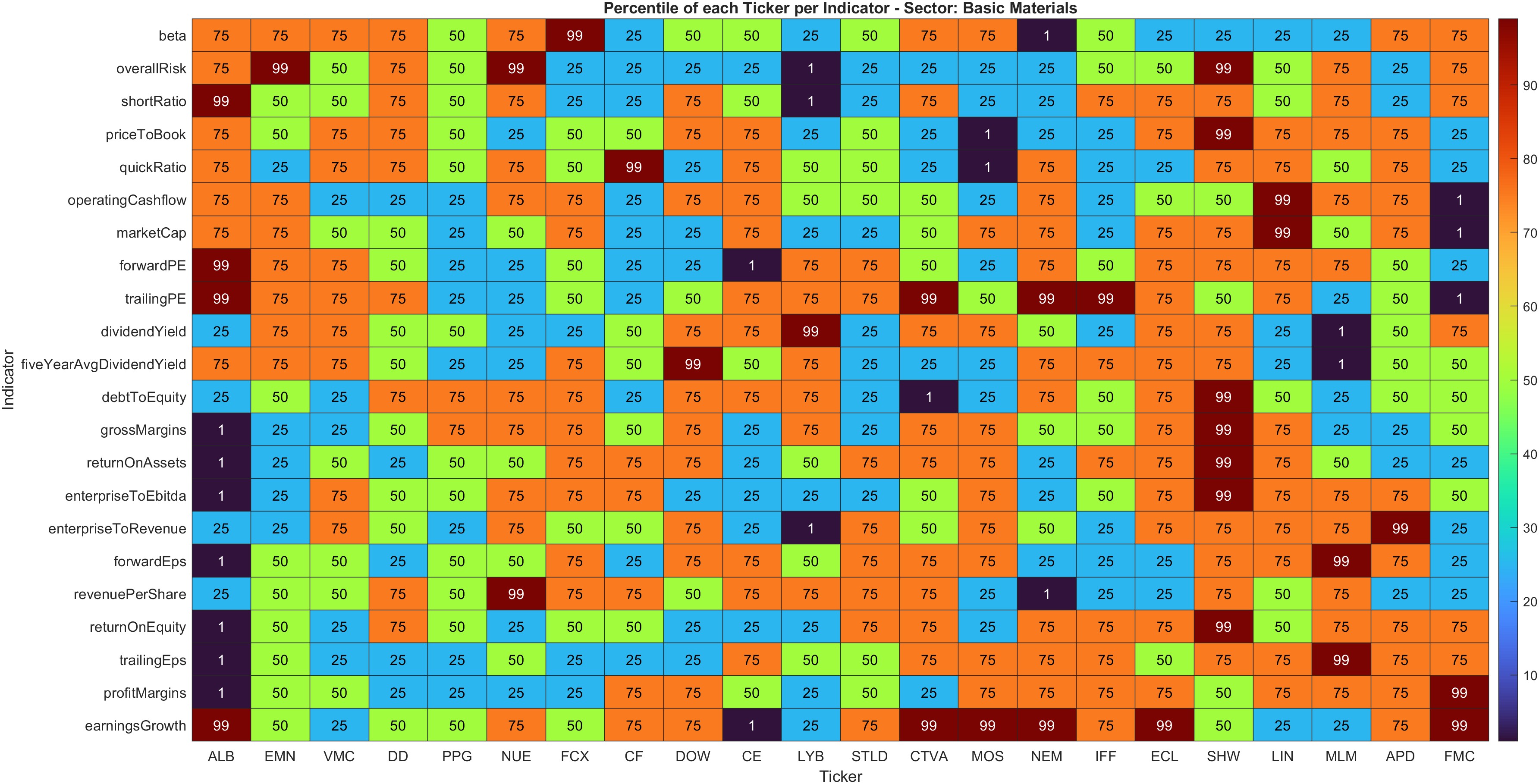
The Basic Materials sector is a cornerstone of the economy, encompassing companies involved in the extraction, processing, and distribution of raw materials. These firms are critical as they supply essential goods to various industries, including construction, technology, and manufacturing. Understanding the performance of this sector requires a keen analysis of several key financial indicators, such as earnings growth, dividend yield, beta, and others. This article delves into these indicators as represented in the heatmap, uncovering insights into the current state and potential future of the Basic Materials sector.
Key Observations
The heatmap reveals distinct patterns and relationships between various financial indicators across companies in the Basic Materials sector. For instance, earnings growth appears to be a critical performance indicator, with companies like Albemarle showcasing a stellar performance in this metric, landing in the 99th percentile. In contrast, companies such as PPG Industries struggle with their earnings growth, placing only in the 25th percentile.
Furthermore, the relationship between beta—a measure of investment risk—and dividend yield is particularly noteworthy. Companies with a higher beta often exhibit greater price volatility. For example, while Albemarle showcases a beta in the 75th percentile, its dividend yield is in the significantly lower 25th percentile. This suggests that companies aiming for growth through reinvestment may not focus on returning cash to shareholders.
Other metrics such as price-to-book ratio and operating cash flow also display variance. Highly rated companies like LyondellBasell Industries stand out with robust operating cash flow metrics, allowing them to finance operations and invest in growth proactively, further distinguishing their financial health from laggards in the sector.
Leaders and Laggards
In the current landscape, Albemarle shines as a leader, excelling not only in earnings growth but also in indicators like forward PE (99th percentile). This reflects investor confidence in the company's potential for future earnings, likely stemming from its strategic positioning in lithium production amid growing demand for electric vehicle batteries.
Conversely, companies such as Mosaic find themselves among the laggards, with metrics like gross margins and return on assets both in the lower percentiles. This trend raises concerns over operational efficiency and profitability, potentially stalling their competitive edge in the market.
Sector-wide Analysis
The Basic Materials sector has shown some unique trends that could shape its future. The overwhelming emphasis on earnings growth and investment in innovation highlights a transitional phase where many companies are focusing on expansions in sustainable materials and technologies. However, the variance in dividend yield—where high-growth companies often opt against paying dividends—presents a challenge for income-focused investors.
Moreover, the debt-to-equity ratio also underscores the financial strategies employed within the sector. A number of companies are showing high debt levels as they finance expansive projects aimed at capturing market share in emerging sectors like renewable resources and advanced materials. The willingness to leverage falls in line with historic growth patterns, but it also introduces risks associated with interest rate hikes and a potential recession.
Conclusion
In conclusion, the Basic Materials sector within the S&P 500 presents a mixed bag of opportunities and challenges. The sector's leaders, such as Albemarle, demonstrate robust earnings growth and investment strategies, positioning themselves for sustained success. In contrast, the laggards reveal significant operational inefficiencies that could hinder their future prospects.
As the demand for sustainable materials rises, companies prioritizing innovation will likely gain traction amidst traditional players who may struggle to adapt. Therefore, investors need to keenly assess individual company performance based on key indicators as outlined in the heatmap, ensuring a balanced view of both risks and opportunities in this critical sector.