
Blackmont
Blackmont's Analysis of the Sectors of the S&P 500
This section illustrates the heatmap percentile rankings of various financial and performance indicators for multiple companies (tickers) within a specific sector of the S&P 500. Each color represents a different percentile (1, 5, 25, 50, 75, 95 and 99) for metrics such as short ratio, dividend yield, market cap, and others, allowing a quick comparison of company performance across indicators.
The Pulse of Healthcare: An In-Depth Analysis of the S&P 500 Sector
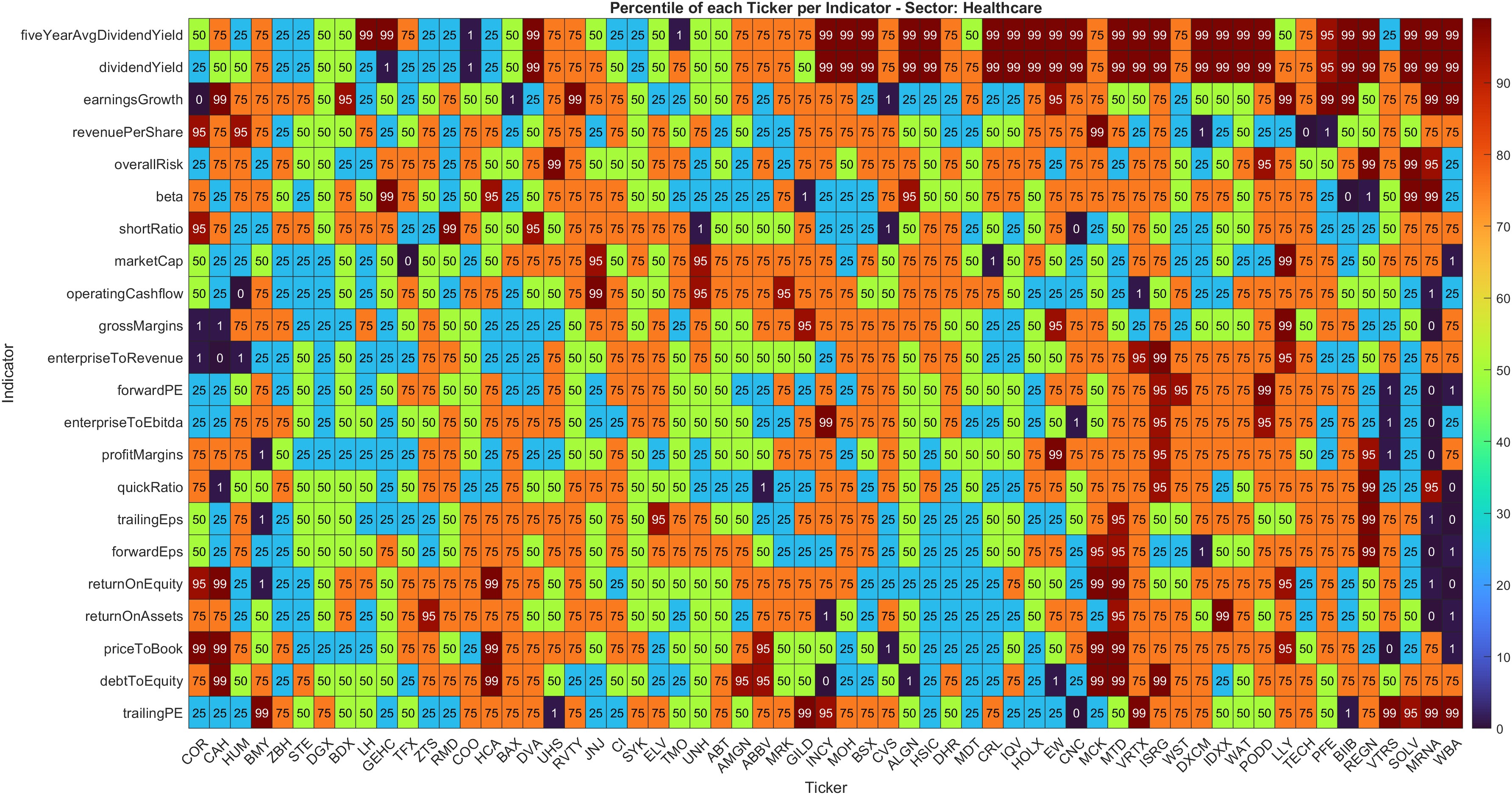
The healthcare sector remains one of the most vital and dynamic components of the S&P 500, affecting millions of lives and shaping the economy. As we delve into the financial performance of key companies in this sector, various indicators such as earnings growth, dividend yield, beta, and others emerge as essential metrics for understanding the viability of these businesses. By analyzing these metrics through percentiles, we can gain valuable insights into current trends and future opportunities.
Key Observations
A close examination of the heatmap reveals several notable patterns among the healthcare companies. First and foremost, earnings growth and revenue per share are often correlated. Companies showing strong earnings growth, such as AbbVie, also tend to display healthier revenue streams. This correlation is not surprising, as consistent earnings often signal operational efficiency and effective cost management.
On the other hand, metrics like beta and overall risk can significantly affect investor sentiment. For instance, companies such as Johnson & Johnson exhibit lower beta values, indicating a more stable investment compared to higher beta companies like Moderna. This stability often attracts conservative investors, especially during periods of market volatility.
Moreover, the analysis of the dividend yield and five-year average dividend yield demonstrates a trend where profitable companies consistently return capital to their shareholders. Interestingly, Gilead Sciences stands out with a high five-year average dividend yield, a compelling factor for income-focused investors. In contrast, companies with lower yields, like Thermo Fisher Scientific, tend to reinvest profits in growth initiatives rather than distribute them.
Leaders and Laggards
Within the sector, certain companies shine as leaders across various financial indicators, while others appear as laggards. Let's take a closer look:
- Leaders:
- AbbVie: Shows remarkable earnings growth and profit margins, signaling strong operational health.
- UnitedHealth Group: Excels in market capitalization and return on equity, reflecting its dominance within the sector.
- Gilead Sciences: Stands out for its high dividend yield, attracting income-seeking investors.
- Laggards:
- Innoviva: Exhibits lower earnings growth and high overall risk, posing challenges for investors.
- HCA Healthcare: Struggles with inconsistent operating cash flow, raising concerns about financial stability.
- Tenet Healthcare: Displays lower profit margins and EBITDA, limiting its financial flexibility.
Sector-wide Analysis
The healthcare sector shows unique behaviors distinct from other sectors in the S&P 500. For example, a strong emphasis on research and development (R&D) can lead to significant volatility in earnings, particularly for companies focused on biotech and pharmaceutical innovation. Companies such as Moderna and Pfizer illustrate this trend, with considerable earnings growth spurred by groundbreaking vaccine developments, yet they face inherent risks associated with regulatory scrutiny and market competition.
As public health issues continue to demand substantial investments, healthcare companies that strategically allocate capital toward innovation are likely to outperform their peers in the long run. However, maintaining balance with strong fiscal policies and healthy profit margins will determine which organizations will thrive.
Conclusion
In summary, the healthcare sector within the S&P 500 is characterized by a mixture of industry leaders and laggards, showcasing a diverse range of financial performance. Leading companies like AbbVie and UnitedHealth Group demonstrate robust fundamentals with promising growth trajectories. In contrast, companies struggling with critical metrics face uphill battles in maintaining investor confidence.
Looking ahead, the sector's outlook is framed by various opportunities and risks. The ongoing demand for innovation in healthcare technology, pharmaceuticals, and biotechnology will likely drive growth. However, fluctuating regulatory environments, increasing operational costs, and market competition present significant challenges. Investors should stay vigilant, choosing stocks that offer strong fundamentals and a clear growth strategy to navigate the complexities of this vital sector.